Nothing About Us Without Us: Bringing ASL to the Festival

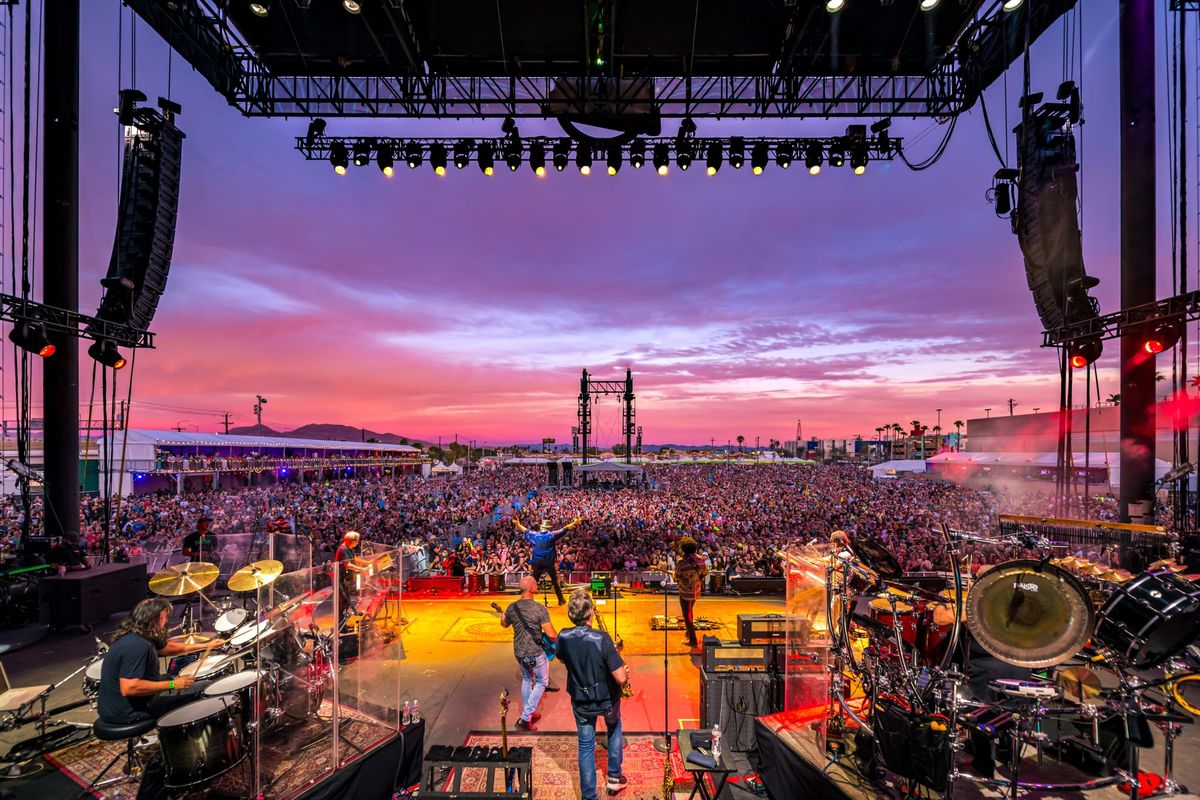
Real inclusion isn't a form you fill out in advance; it's already there when you arrive.
Picture this: you're deaf, and a friend texts you at noon - she's got an extra ticket, the headliner's on at nine, come. For most people that's an easy yes. For you it's a no, because the only way to actually experience that set with access was to have emailed the festival thirty days ago to request an interpreter. The spontaneity that makes live music magic - changing your mind, following a friend, discovering someone you've never heard of - was quietly never offered to you.
That was the system I inherited in the summer of 2019 when I looked at how our festival served deaf and hard-of-hearing fans. The more I sat with it, the more it bothered me. So I built the case to change it. Here's the thinking, and the work it actually took.
The illusion of access
The moment I put that thirty-days-notice rule next to how we handle other access needs, it fell apart. We don't ask a wheelchair user to email ahead and specify which sidewalks and doorways they intend to use so we can lay out ramps in advance. The ramp is just there, because access that has to be requested, justified, and scheduled weeks out isn't really access - it's the illusion of it.
The principle I kept coming back to is simple: clear is kind. True access means a deaf fan can buy a ticket whenever they want, with all the information in front of them, and decide in the moment which set to catch - exactly like everyone else in the crowd.
There's a deeper reason this particular community keeps getting left out: theirs is a nearly invisible disability, and they're often missing from the accessibility conversation entirely - when the ADA was written, the Deaf community largely wasn't at the table. There's a phrase from disability advocacy I couldn't stop thinking about: nothing about us without us. If we were going to do this, the plan itself had to be built with Deaf expertise at the center - not designed for the community from the outside.
What real access actually takes
This is the part I care about most, because conviction without a plan is just a nice sentiment. I didn't bring leadership a feeling; I brought an operational plan with a budget.
The core insight is that performance interpreting is a craft, not a utility - nothing like the interpreter you'd get at a doctor's appointment. A performance interpreter studies the artist's catalog, learns the lyrics, absorbs the mood, and works with the Deaf community to understand how slang and brand-new terms get signed, so they can carry not just the words but the electricity of the show. That prep is exactly why festivals default to "request it 30 days ahead." It feels logical. It still fails the audience.
The fix was to staff for it on purpose. The plan hired an Interpretive Services Coordinator sixty days out - an interpreter themselves, connected to the Deaf community - to recruit and schedule a qualified team, coordinate with booking to get set lists early, and problem-solve the odd cases. Crucially, the team included a Certified Deaf Interpreter: a Deaf person, native in the language, serving as a linguistic mentor to the hearing interpreters. Nothing about us without us, built right into the staffing.
Then the details that separate real inclusion from a checkbox: placing interpreters where deaf fans could see the performer and the interpreter while standing in the crowd near the sound - not exiled to a far-off ADA platform; wiring interpreters with earpieces for live audio; offering assisted listening devices for hard-of-hearing fans; giving artists the option to meet their interpreter beforehand; and training security, staff, and emergency teams to communicate across the whole audience. It added up to a real number - roughly $38,000 - which I set next to a real business case: a conservative projection of incremental tickets from fans who'd finally been invited, plus the goodwill and press that come from leading instead of merely complying.
Why it's worth it - and where the industry went
The objection I heard most was the money. But "that's a lot" only sounds decisive until you weigh it against what you're actually buying: not a legal box checked, but a community welcomed, a field full of other attendees watching you make belonging visible, and a reputation as the festival that did it right. Belonging creates joy, and joy is the entire product.
I am overwhelmingly proud and amazed at how fast the ground shifted from there. Since around 2019, this stopped being a bold ask and started becoming table stakes - most major festivals now build ASL interpretation into their headline sets as a matter of course, covering at least the top acts each day rather than leaving deaf fans to file requests and hope. The thing that once needed a whole persuasion deck is increasingly just how it's done.
That's usually how inclusion goes. It looks expensive and radical right up until it looks obvious. The organizations worth working for are the ones willing to be early - to design access in from the start instead of waiting to be asked.